Part 1 - What a Billionaire's Checklist Can Teach Us About Fixing Net Zero: Charlie Munger's Original 25
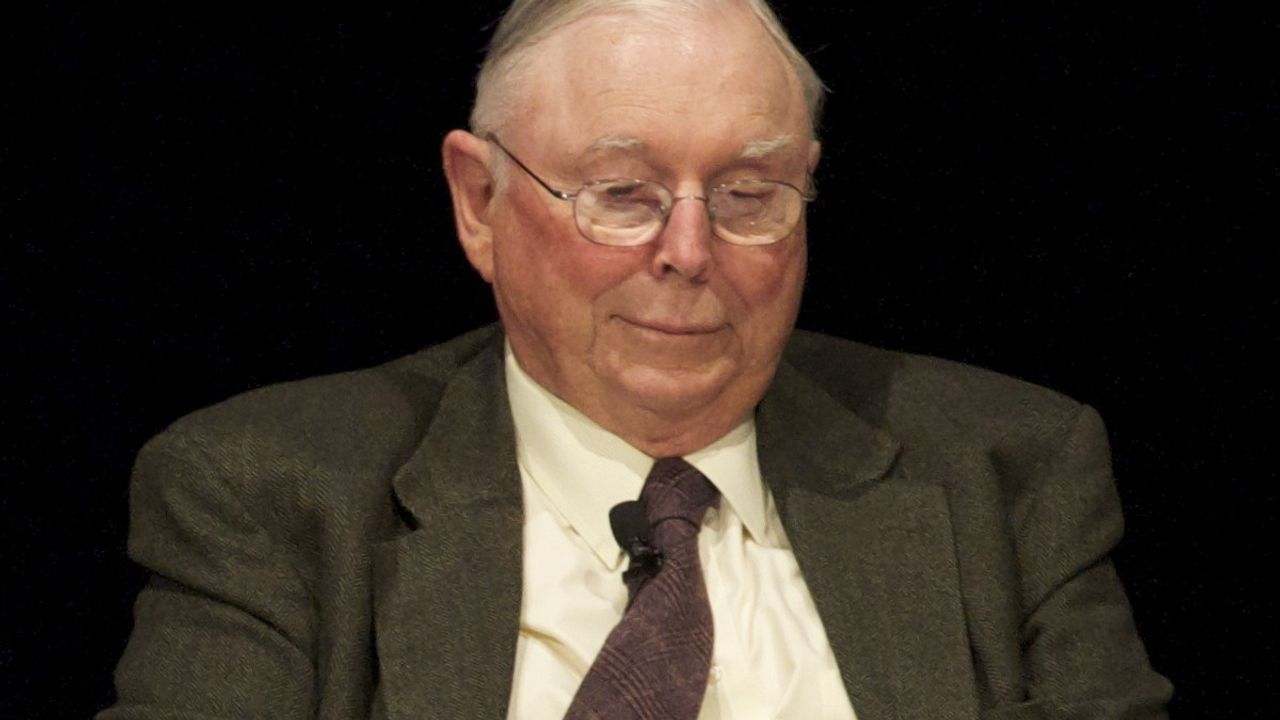
Charlie Munger was the billionaire vice-chairman of Berkshire Hathaway and Warren Buffett's business partner for more than six decades, widely credited as the intellectual co-architect of one of the most successful investment records in history.
Munger was never just a numbers man. He believed the biggest risk to any investor was not a bad balance sheet but bad thinking, and that most investment errors were really errors of psychology in disguise. So he spent decades building a personal mental checklist of the ways human judgment reliably goes wrong, in order to catch those errors before they proved costly.
That checklist became his 1995 Harvard speech, later revised and expanded, titled "The Psychology of Human Misjudgment": a catalogue of 25 psychological tendencies that reliably distort decision-making, whether the decision is picking a stock, running a company, or voting on a policy.
Munger's point was never that these tendencies are irrational quirks to feel ashamed of. Most of them exist because they were genuinely useful, on average, across human evolution. They can help explain a surprising amount of why climate policy in general, and net zero in particular, struggles for public traction despite majority public support.
The 25 tendencies
1. Reward and Punishment Superresponse Tendency. People respond to incentives far more powerfully than they, or anyone observing them, realise. Munger's own summary was blunt: show him the incentive and he will show the outcome. People will genuinely come to believe whatever serves their compensation or self-interest.
2. Liking/Loving Tendency. People ignore the faults of, and comply with the wishes of, people and things they like or love. Affection distorts judgment. People see what they want to see in those they are fond of.
3. Disliking/Hating Tendency. The mirror image of tendency two. People ignore the virtues in people or things they dislike, and distort facts to justify the dislike.
4. Doubt-Avoidance Tendency. Uncertainty and doubt are uncomfortable, so the brain rushes to resolve them, often by making a quick, ill-informed decision simply to escape the discomfort of not knowing.
5. Inconsistency-Avoidance Tendency. Once a belief, habit, or conclusion has been adopted, people resist changing it even when new evidence contradicts it. Commitment and consistency, once established, are very hard to dislodge.
6. Curiosity Tendency. An innate drive to explore and learn, more developed in humans than in almost any other species. Munger treated this as one of the genuinely positive tendencies, an antidote to several of the others.
7. Kantian Fairness Tendency. A deep-seated expectation of fairness, modelled on Kant's categorical imperative: people want rules that would work if everyone followed them, and react strongly when they sense unfairness, sometimes even at a personal cost to enforce it.
8. Envy/Jealousy Tendency. Munger considered envy one of the most disguised and underrated drivers of human behaviour, from sibling rivalry to professional resentment, precisely because almost nobody admits to feeling it.
9. Reciprocation Tendency. People feel compelled to return favours, concessions, and even hostility in kind. Salespeople exploit this constantly through free samples and small favours, and someone perceived to be "on a roll" tends to act as others expect, reinforcing the pattern.
10. Influence-from-Mere-Association Tendency. People are swayed by simple associations regardless of logical relevance: a product linked to a celebrity, bad news blamed on the messenger who delivered it (what Munger called the Persian Messenger Syndrome). Advertising is built almost entirely on this tendency.
11. Simple, Pain-Avoiding Psychological Denial. When reality is too painful to accept, the mind simply distorts or denies it. This is one of the most powerful tendencies precisely because the person experiencing it usually has no idea it is happening.
12. Excessive Self-Regard Tendency. People overestimate their own abilities, virtues, and possessions, including things merely owned or chosen, which suddenly seem better once owned than they did before. This is the root of most overconfidence.
13. Overoptimism Tendency. Related to but distinct from excessive self-regard: an innate bias toward believing outcomes will be good, independent of the evidence, especially when a particular outcome is wanted to be true.
14. Deprival-Superreaction Tendency. Loss looms larger than an equivalent gain, the same asymmetry behind loss aversion in behavioural economics. Losing something, or the mere threat of losing something almost had, triggers a far stronger reaction than gaining the same thing would produce pleasure. This explains labour disputes, gambling escalation, and fierce defences of trivial territory.
15. Social-Proof Tendency. People look to the behaviour and beliefs of others, especially under stress or uncertainty, as a guide for their own thinking and action. This is what drives bubbles, panics, and crowd behaviour, for better and worse.
16. Contrast-Misreaction Tendency. Perception is skewed by comparison rather than absolute measurement. A £100 item seems cheap next to a £1,000 one, regardless of its actual value. Salespeople and negotiators exploit this constantly by controlling the anchor point.
17. Stress-Influence Tendency. Moderate stress can sharpen performance, but heavy or sustained stress produces extreme, often dysfunctional reactions and impairs sound decision-making.
18. Availability-Misweighing Tendency. Disproportionate weight is given to information that is vivid, recent, or easy to recall, rather than information that is statistically representative. A dramatic anecdote beats a dry base rate every time in shaping belief.
19. Use-It-or-Lose-It Tendency. Skills, knowledge, and mental faculties atrophy through disuse. Munger saw continual practice and teaching as essential to keeping judgment sharp over a lifetime.
20. Drug-Misinfluence Tendency. Chemical dependency distorts judgment and behaviour, often severely and permanently, overriding otherwise rational decision-making.
21. Senescence-Misinfluence Tendency. Cognitive decline with age naturally degrades judgment, sometimes gradually and sometimes sharply, a tendency Munger discussed candidly given his own long life.
22. Authority-Misinfluence Tendency. People are strongly inclined to follow the guidance of authority figures, sometimes well past the point where that trust is deserved, as demonstrated starkly in Milgram's obedience experiments.
23. Twaddle Tendency. People, and especially institutions, waste enormous time and energy on pompous, trivial, or irrelevant chatter, what Munger called twaddle, that displaces focus from what actually matters.
24. Reason-Respecting Tendency. People are more likely to comply with a request or accept a conclusion when given a reason for it, even when the reason is weak or largely irrelevant. The mere presence of the word "because" increases compliance.
25. Lollapalooza Tendency. The capstone tendency: when several of the above operate together in the same direction, they do not simply add up, they compound, producing extreme outcomes far beyond what any single tendency could cause alone. Munger used this to explain phenomena as varied as cult behaviour, market manias, and corporate scandals.
Why this list still matters
Munger's list was not written as an academic exercise. It was a practical checklist he used personally to catch himself before making bad decisions, and to understand why other smart, well-intentioned people and institutions still get things badly wrong. It applies just as well to a failed product launch as it does to a national policy that quietly loses momentum despite broad public backing.
The tendencies are most dangerous not in isolation but in combination, which is exactly why Munger placed the Lollapalooza Tendency last, as the summary of everything above it. Any time a plan, a market, or a movement behaves in a way that seems to defy its own stated logic, Munger's method was to ask which of these 25 forces are stacking up underneath it.
The next article in this series takes that exact question and applies it to 2026: which of these tendencies have changed shape entirely in the age of smartphones, engagement-ranked feeds, and identity-driven politics, and which combinations are doing the most damage right now.
Source: Charlie Munger, "The Psychology of Human Misjudgment," Harvard University, 1995 (revised 2005). Full transcript available via Farnam Street.
Ready to pressure-test your strategy?
Book a Strategy Sprint and get a clear, actionable plan for your climate venture.
Book a Strategy Sprint